West German pottery has become a favourite among vintage collectors and interior design enthusiasts. Recognised for its sculptural shapes, bold colours, and distinctive textured glazes, this pottery captures the creativity of German ceramics during the 1950s, 1960s, and 1970s.
From the dramatic lava glazes of Scheurich to the expressive forms of Ruscha and the colourful designs of Bay Keramik, West German pottery offers an enormous variety of collectible pieces. These vases look beautiful in contemporary interiors, but their growing popularity also raises an important question: How can you tell whether a West German vase is authentic?
Whether you are buying your first vintage vase or expanding an established collection, understanding maker's marks, glaze patterns, base characteristics, and production periods can help you make a more informed purchase.
In this guide, we explain what to look for when identifying authentic West German pottery and how to avoid common mistakes when buying online.
What Is West German Pottery?
West German pottery generally refers to ceramics produced in West Germany, particularly during the post-war decades. The period from approximately 1950 to 1970 is especially associated with the bold, experimental designs that collectors seek today, although production continued before and after these years.
Following the Second World War, German ceramic manufacturers developed distinctive approaches to form, colour, and surface decoration. Many factories produced decorative vases with sculptural silhouettes, rich glazes, and striking contrasts.
Rather than simply serving a practical purpose, these objects became decorative statements.
Common characteristics include:
-
Sculptural silhouettes and geometric forms
-
Earthy colours, including brown, orange, ochre, and olive green
-
Contrasting bands of colour
-
Textured and relief-patterned surfaces
-
Drip, mottled, and lava-style glazes
-
Abstract and modernist decoration
Not every West German vase has all these features. Some are minimalist, while others are highly expressive. The variety is part of what makes this pottery so appealing to collectors.
1. Start by Identifying the Manufacturer's Mark
One of the most useful steps when examining a potential West German vase is to inspect the base.
Many manufacturers applied marks, stamps, impressed numbers, or paper labels to their products. These can help establish the maker, model, and sometimes the production period.
Several well-known manufacturers are particularly worth learning about.
Scheurich
Scheurich is one of the best-known names in West German pottery. Its production included a wide range of decorative vases, from simple, elegant shapes to colourful pieces with textured glazes.
Collectors frequently encounter impressed or printed Scheurich marks alongside model and size numbers.
Bay Keramik
Bay Keramik became known for its colourful designs and expressive forms. Its vases often feature bold combinations of glaze, geometric decoration, and sculptural profiles.
The manufacturer's name or an associated mark can provide a useful starting point for identification.
Ruscha
Ruscha is particularly interesting to collectors who appreciate experimental glaze techniques and modernist ceramic design.
Some pieces feature dramatic surface effects and distinctive forms. Marks and model numbers can help distinguish particular designs.
Dümler & Breiden
Dümler & Breiden produced a broad range of West German decorative pottery, including vases with textured surfaces and richly coloured glazes.
Its marked pieces are frequently encountered in the vintage market.
Important: Marks varied between manufacturers and production periods. A familiar-looking stamp is useful evidence, but it should not be the only basis for declaring a vase authentic.
2. Understand the Numbers on the Base
Many West German pottery vases have numbers impressed or printed underneath.
These can sometimes appear as a manufacturer's code followed by a model number and a size indication. However, numbering systems differed between factories, and there is no single universal format.
For example, a vase might have a manufacturer's name alongside a number identifying its design and another number indicating its size.
Do not assume that every number is a date.
To investigate a particular vase:
-
Photograph the entire base clearly.
-
Record every number, letter, and symbol.
-
Search for the same combination in documented examples.
-
Compare the shape and decoration with examples attributed to that manufacturer.
-
Check whether the numbering format is consistent with the proposed identification.
A matching model number is more convincing when the vase's shape, proportions, glaze, and marking also correspond with documented examples.
3. Examine the Glaze Patterns
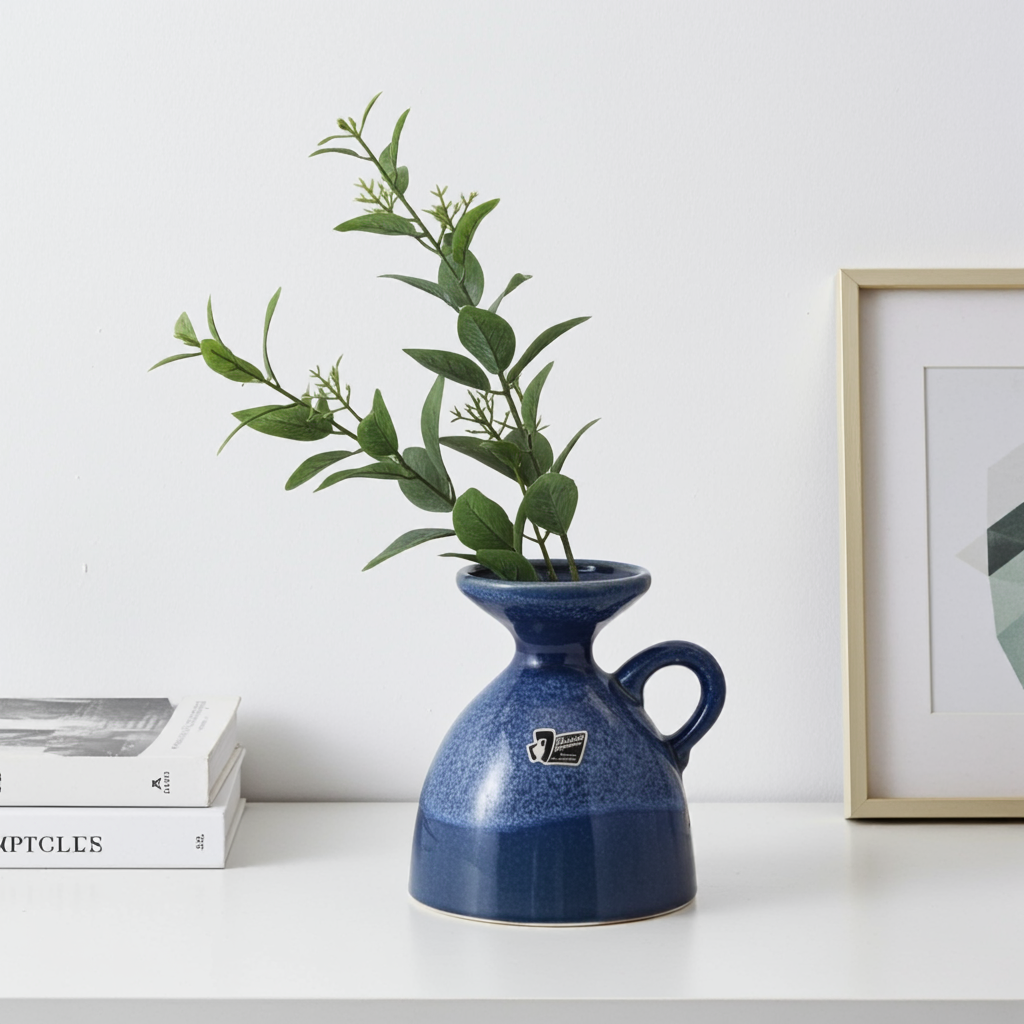
The glaze is one of the most distinctive features of West German pottery.
During the 1950s, 1960s, and 1970s, manufacturers experimented with a wide range of surface treatments, creating designs that remain instantly recognisable.
Lava Glaze
Lava-style glazes feature a raised, textured surface that can resemble volcanic rock.
The effect may be created through specialised glazing and firing techniques, resulting in a dramatic, uneven texture.
Fat Lava
The term Fat Lava is commonly used by collectors to describe certain bold, heavily textured West German glazes, particularly those associated with the 1960s and 1970s.
These pieces may combine thick, flowing glaze with contrasting colours and sculptural forms.
However, not every textured West German vase is Fat Lava, and the term is not the name of a single manufacturer.
Drip Glaze
Drip glazes create flowing lines of colour across the surface. They can produce striking contrasts between the main body and the decorative glaze.
Mottled and Reactive Effects
Some vases have cloudy, speckled, or irregular finishes produced by the interaction of glazes during firing.
These effects can make each piece visually distinctive.
What Should You Look For?
When assessing a vase, consider whether the glaze is consistent with examples from the claimed manufacturer and period.
Look at:
-
The texture and thickness of the glaze
-
The colours and their arrangement
-
The relationship between the glaze and the shape
-
The finish around the rim and base
-
Whether the decoration matches documented examples
An unusual glaze is not automatically evidence of authenticity. Modern ceramics can imitate vintage finishes, so the glaze should always be considered alongside the maker's mark and construction.
4. Inspect the Base and Foot Ring
The underside of a West German vase can reveal useful information about its manufacture.
Turn the vase over and examine the foot ring, unglazed areas, and any visible finishing marks.
Look for:
-
An unglazed or differently finished base
-
A clearly defined foot ring
-
Impressed or stamped markings
-
Consistent construction
-
Glaze boundaries around the bottom
-
Wear that is plausible for the object's age
Many vintage ceramic vases have a foot ring that provides stability and separates the glazed body from the surface on which the vase stands.
However, base designs vary significantly between factories and models. There is no single base characteristic that proves a vase is genuine West German pottery.
Natural wear can provide context, but it is not definitive proof either. A reproduction can be artificially aged, while a genuine vintage vase may have been carefully preserved and show very little wear.
The strongest identification combines the base details with the form, glaze, and manufacturer's mark.
5. Learn the Typical Production Periods
Understanding the historical context can help you recognise whether a vase's design is plausible for its claimed age.
The 1950s: Post-War Modernism
During the 1950s, German ceramic design increasingly explored modern forms, new colour combinations, and decorative possibilities.
Vases from this period may feature relatively restrained silhouettes alongside experimental glazing.
The 1960s: Sculptural Forms and Bold Colour
The 1960s were particularly important for the development of distinctive West German decorative pottery.
Collectors often associate this decade with:
-
Rounded or angular silhouettes
-
Strong contrasts in colour
-
Abstract decoration
-
Textured glazes
-
Modernist and organic forms
Many of the designs now associated with vintage West German pottery emerged during this period.
The 1970s: Expressive Glazes and Dramatic Surfaces
During the 1970s, some manufacturers continued to explore increasingly expressive forms and surface effects.
Bold colours, heavy textures, and striking glaze combinations became particularly recognisable features of certain designs.
These are broad stylistic tendencies, not rigid rules. Manufacturers produced different styles simultaneously, and individual designs may span several years.
A vase's appearance alone cannot establish an exact production date. Manufacturer records, model references, documented examples, and reliable provenance are more useful for narrowing down its age.
6. Check the Shape and Proportions
The silhouette of a vase can be just as informative as its glaze.
West German pottery includes a wide variety of forms, such as:
-
Tall, narrow-necked vases
-
Rounded bulbous forms
-
Cylindrical vases
-
Angular, geometric shapes
-
Sculptural asymmetrical designs
-
Wide-bodied vessels with narrow openings
When researching a vase, compare its proportions with documented examples from the proposed manufacturer.
Pay attention to the neck, shoulder, body, foot, and rim.
A vase attributed to a particular model should broadly correspond with the known design. Differences in proportions or decoration may indicate a different model, a later variation, or an incorrect attribution.
This is especially important when buying a vase online, where photographs can make objects appear larger, smaller, or differently shaped than they are in reality.
7. Be Careful With Reproductions and Incorrect Attributions
West German pottery is popular because it combines decorative appeal with a rich design history. As a result, vintage-inspired ceramics and reproductions can sometimes be confused with genuine period pieces.
Common warning signs include:
-
A seller claiming a specific manufacturer without supporting evidence
-
A model number that does not match the design
-
Markings inconsistent with documented examples
-
An implausible production date
-
Photographs that avoid showing the base
-
Descriptions using terms such as “Fat Lava” without further identification
None of these points automatically proves that an object is inauthentic. They are reasons to investigate further.
It is also important to distinguish an authentic vintage vase from an authentic vase that has been incorrectly attributed to a famous manufacturer.
A piece can be genuinely old without being made by Scheurich, Ruscha, or Bay Keramik.
When the manufacturer is uncertain, a responsible description should acknowledge that uncertainty rather than make an unsupported claim.
8. Assess the Condition Before Buying
Condition affects both the appearance and desirability of a vintage vase.
West German pottery often has textured surfaces, which can make certain types of damage difficult to notice in photographs.
Before purchasing, check for:
-
Chips around the rim
-
Cracks in the body
-
Hairline fractures
-
Repairs or restoration
-
Damaged areas on raised glaze
-
Significant scratches
-
Unusual wear around the base
Fine crazing may occur on some glazed ceramics, but its significance depends on the piece and the extent of the condition issue.
Ask the seller for close-up photographs if anything is unclear.
Also remember that small manufacturing irregularities are not necessarily damage. Hand-finished surfaces and glaze variations may be part of the original production process.
A transparent condition description helps you decide whether a vase is suitable for your collection and whether its price is reasonable.
9. Compare Prices and Research Comparable Pieces
Not every West German vase is equally collectible.
Some models are widely available, while others attract stronger demand because of their designer, form, glaze, rarity, or condition.
Factors that can influence value include:
-
Manufacturer
-
Model
-
Designer, where documented
-
Production period
-
Size
-
Colour and glaze
-
Condition
-
Rarity
-
Provenance
-
Current collector demand
Before paying a premium, look for comparable examples from the same manufacturer and model.
Auction archives can be particularly useful because completed sales offer evidence of actual transaction prices. Asking prices on retail websites are useful for comparison but do not necessarily reflect what buyers are willing to pay.
A rare-looking vase is not automatically valuable, and a famous manufacturer's name does not guarantee that every example will appreciate in value.
Buy a piece because you appreciate its design and quality, rather than assuming that its market price will always rise.
10. Where Can You Buy Authentic West German Vases?
There are several places to look for vintage West German pottery.
Flea Markets and Antique Fairs
These can be excellent places to discover unusual ceramics. However, identification often depends on your own knowledge, and information about a vase's origin may be limited.
Online Marketplaces
Online marketplaces offer a wide selection, but descriptions and attributions can vary in quality. Always examine the photographs, markings, and condition details carefully.
Specialist Vintage Shops
A specialist dealer may be able to provide more information about a vase's manufacturer, design, and condition.
Curated Vintage Webshops
For buyers who prefer a more straightforward experience, a curated webshop can make it easier to discover interesting vintage ceramics without searching through countless listings.
At TheyUnique.com, the focus is on carefully selected vintage and collectible design objects, including vintage ceramics and decorative pieces. For buyers interested in West German pottery, a curated selection can provide a convenient starting point when looking for distinctive objects with character.
When purchasing any collectible online, look for clear photographs, accurate descriptions, transparent condition information, and evidence supporting claims about the manufacturer and period.
These details help you make an informed decision and understand exactly what you are buying.
A Quick Checklist: Is Your West German Vase Authentic?
Before buying, use this checklist to review the main indicators.
-
Maker's mark: Is the manufacturer identified, and does the mark match documented examples?
-
Model number: Does the number correspond with the vase's form and decoration?
-
Glaze: Is the glaze consistent with the claimed manufacturer and period?
-
Base: Are the foot ring, finish, and markings plausible for the design?
-
Shape: Does the silhouette match known examples?
-
Age: Is the claimed production period supported by evidence?
-
Condition: Are chips, cracks, repairs, and other issues disclosed?
-
Provenance: Is there any supporting information about the object's history?
-
Price: Does the asking price make sense compared with comparable examples?
-
Seller transparency: Are the photographs and description detailed enough to assess the piece?
No single characteristic can establish authenticity with complete certainty. The most reliable approach is to consider all available evidence together.
Why West German Pottery Still Belongs in Modern Interiors
One reason West German pottery continues to attract attention is its ability to work beautifully in contemporary homes.
A sculptural Scheurich vase can become a focal point on a minimalist sideboard. A colourful Bay Keramik piece can bring warmth to a neutral interior. A textured Ruscha vase can add depth to a shelf filled with modern objects.
These ceramics are not simply reminders of a particular decade. Their forms, materials, and decorative qualities make them relevant to contemporary interior design.
They also offer something different from mass-produced décor: individuality, manufacturing history, and a connection to a distinctive period of European design.
You do not need to build an entire vintage interior to enjoy them. A single well-chosen vase can add colour, texture, and character to an otherwise modern space.
Final Thoughts
Identifying an authentic West German vase takes more than recognising a bold glaze or an attractive retro shape.
The most useful clues are the manufacturer's mark, model number, glaze pattern, base construction, shape, and documented production history. Together, these details can help you distinguish a genuine vintage piece from a modern imitation or an incorrectly attributed object.
If you are just starting your collection, begin by learning about manufacturers such as Scheurich, Bay Keramik, Ruscha, and Dümler & Breiden. Compare documented examples, research model numbers, and take time to understand the differences between their designs.
Most importantly, buy thoughtfully. A vase does not need to be rare or expensive to be worth collecting. A well-made piece with a beautiful form, interesting glaze, and authentic history can be a rewarding addition to your home.
For buyers who prefer a more convenient starting point, TheyUnique.com offers a curated selection of vintage and collectible design objects. Choosing carefully selected pieces can simplify the search, although buyers should still review the specific item's description, condition, and available authenticity information before purchasing.
West German pottery remains appealing because it combines craftsmanship, experimentation, and timeless decorative character. By learning how to recognise the real thing, you can collect with greater confidence and give these distinctive ceramics another chapter in their history.




Reactie plaatsen
Reacties